Our Animals
From humming llamas to shaggy Highland cows, our friendly farmyard family loves meeting new people. Whether you visit us on the farm or we bring the animals to you with our mobile petting zoo, there is a hands-on experience for all ages. Read on to meet each of our animals and discover what makes them so special.
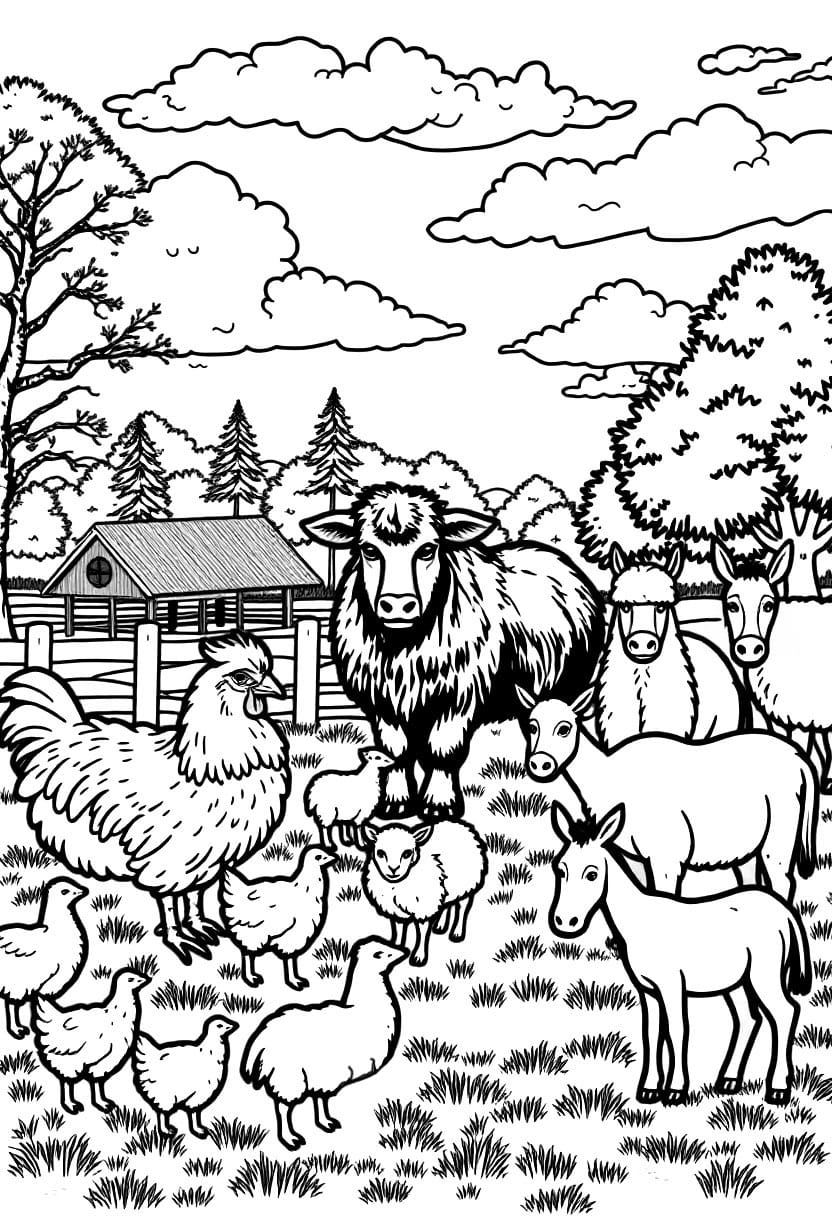
FREE! Colouring Page for Little Visitors
Our Alpacas
We have three alpacas: Lavender (the grey), Violet (black), and Lily (white). Alpacas hum softly to communicate and stay in touch with their herd, and they rarely spit at people, reserving that mostly for squabbles with each other. They are gentle, inquisitive and a little shyer than llamas, preferring slow movements and disliking being touched on the head or face. They graze on grass and hay with alpaca pellets as an occasional treat, but should never be given bread or sugary snacks. Children and adults can hand-feed them, stroke their soft fleecy necks and walk them on a halter, making them one of the calmest and most rewarding animals to meet on a farm visit.

Our Donkeys
Our two donkeys are Dominic – the small one, and his mum Maria. Donkeys have exceptional memories and can recognise old companions after many years apart. Often mislabelled stubborn, they are simply cautious, with a calm and affectionate temperament. They love routine, gentle grooming, hay and the odd carrot, but dislike rushed handling and heavy rain, as their coats are not waterproof. Children and adults can brush, stroke and hand-feed them under supervision.
Our Sheep
Our sheep all have names starting with the same letter! This is because their pedigree is named alphabetically with the Valais Blacknose Sheep Breed Society, with this years lambs all starting with the letter ’N’ with Kingdom as our breed prefix. Valais Blacknose sheep are Britain’s most numerous breed, hardy hill sheep easily spotted by their striking black faces and curled horns. Naturally gentle but a little independent-minded, they warm up quickly around food. They enjoy grass, hay and sheep nuts, and a quiet, patient approach, but dislike being chased or grabbed by the fleece. Visitors of all ages can hand-feed them and stroke their thick, weatherproof coats.
Our Chickens
We’re sadly down to two chickens at the moment due to the local fox pack – Speckles and Velvet. Chickens are surprisingly clever and can recognise many different faces. Inquisitive and sociable, ours get along with everyone; as you can see from the pictures, our chickens are very friendly with our Highland cows! They love corn and mealworms but dislike loud noises and being chased. Children can gently hold a well-supported hen or feed corn from a flat hand, while adults enjoy helping collect eggs.
Our Cows
Our three cows are Morag (the red one), Ellie (blond), and Rose (black). A Highland cow’s long fringe, called a dossan, shields its eyes from wind, rain and flies. Despite their imposing horns, Highlands are famously docile and laid-back. They graze happily on grass and hay and adore a good brush, but dislike hot weather and being approached suddenly from behind. Children and adults can brush their shaggy coats, offer feed and pose for memorable photos.
Our Horses
The horse in the picture is Crystal, and she’s the one that we will use for handling. We also have two big grey mares called Lily and J’Adore, who are both recently confirmed in foal for spring babies! Horses can sleep standing up, thanks to a clever locking mechanism in their legs. Sensitive and social, they thrive on routine and gentle handling, enjoying hay, grass and small pieces of carrot or apple. They dislike loud noises and being approached from directly behind, where they cannot see. Children and adults can groom them, lead them and feed treats from a flat, open palm.
Animal Welfare
The health and welfare of our animals is paramount to us, which is why we strictly adhere to the 5 freedoms:
1. Freedom from hunger & thirst
2. Freedom from discomfort
All our animals have an appropriate environment that includes shelter and a comfortable resting area.
3. Freedom from pain, injury or disease
All our animals are seen everyday so a rapid diagnosis and treatment can be given if they become ill. They are also housed, fed and cared for correctly to prevent any pain, injury or disease.
4. Freedom to express normal behaviour
All our animals have more than the minimum recommended space, proper facilities, appropriate enrichment and company of animals of its own kind.
5. Freedom from fear & distress
All our animals are kept in conditions that keep them comfortable and stress free. On encounters, if any of our animals are in a situation where they could become stressed, they will immediately be returned to their safe environment to prevent discomfort.